
No products in the cart.
Introduction
Selecting the right supplier is one of the most important decisions in procurement. A reliable vendor can improve product availability, reduce procurement costs, ensure consistent quality, and support business growth. On the other hand, an unreliable supplier can cause delays, stock shortages, quality issues, and operational disruptions.
Whether you are sourcing office stationery, copier paper, printer cartridges, housekeeping supplies, packaging materials, or industrial products, a structured vendor evaluation process helps businesses make informed procurement decisions.
This guide provides a practical vendor evaluation checklist that procurement teams can use when selecting and reviewing suppliers.
Table of Contents
What Is Vendor Evaluation?
Vendor evaluation is the process of assessing suppliers based on predefined criteria such as quality, pricing, delivery performance, service levels, compliance, and financial stability.
The objective is to identify suppliers that can consistently meet business requirements while delivering long-term value.
Why Vendor Evaluation Is Important
Effective supplier evaluation helps businesses:
- Improve procurement decisions
- Reduce supply chain risks
- Ensure product quality
- Improve delivery performance
- Control procurement costs
- Build long-term supplier relationships
- Enhance operational efficiency
Vendor selection should never be based solely on price.

Vendor Evaluation Checklist
1. Product Quality
Quality should be one of the first evaluation criteria.
Consider:
- Product specifications
- Consistency of quality
- Quality certifications
- Defect rates
- Product testing results
Reliable product quality reduces operational issues and customer complaints.
2. Pricing Competitiveness
Evaluate pricing based on overall value rather than the lowest quote.
Review:
- Product pricing
- Volume discounts
- Payment terms
- Hidden costs
- Delivery charges
The lowest-priced supplier may not always provide the best value.
3. Delivery Performance
Timely delivery is critical for inventory planning.
Assess:
- On-time delivery rate
- Lead time consistency
- Emergency order capability
- Delivery coverage
Suppliers with strong delivery performance help prevent stock shortages.
4. Product Availability
A supplier should be capable of maintaining adequate stock levels.
Evaluate:
- Inventory availability
- Production capacity
- Supply continuity
- Ability to meet seasonal demand
Consistent availability improves procurement reliability.
5. Financial Stability
Financially stable suppliers are less likely to experience operational disruptions.
Review:
- Business history
- Financial performance
- Market reputation
- Growth trajectory
Supplier financial health contributes to long-term supply security.
6. Customer Service and Responsiveness
Supplier support becomes critical when issues arise.
Assess:
- Response time
- Escalation processes
- Technical support
- Issue resolution capability
Strong customer service improves procurement efficiency.
7. Compliance and Certifications
Verify relevant certifications and compliance requirements.
Examples include:
- GST compliance
- BIS certifications
- ISO certifications
- Environmental certifications
- Industry-specific standards
Compliance reduces procurement risks.
8. Supplier Reputation
Market reputation often provides insights into supplier reliability.
Consider:
- Customer reviews
- Industry references
- Years in business
- Market presence
Established suppliers generally offer greater reliability.
9. Payment Terms
Flexible payment terms can improve cash flow management.
Evaluate:
- Credit period
- Payment flexibility
- Early payment discounts
- Financing options
Payment terms directly affect working capital requirements.
10. Technology and Communication
Modern suppliers often provide better procurement support through technology.
Look for:
- Online ordering systems
- Inventory visibility
- Order tracking
- Automated communication
Technology-enabled suppliers improve procurement efficiency.
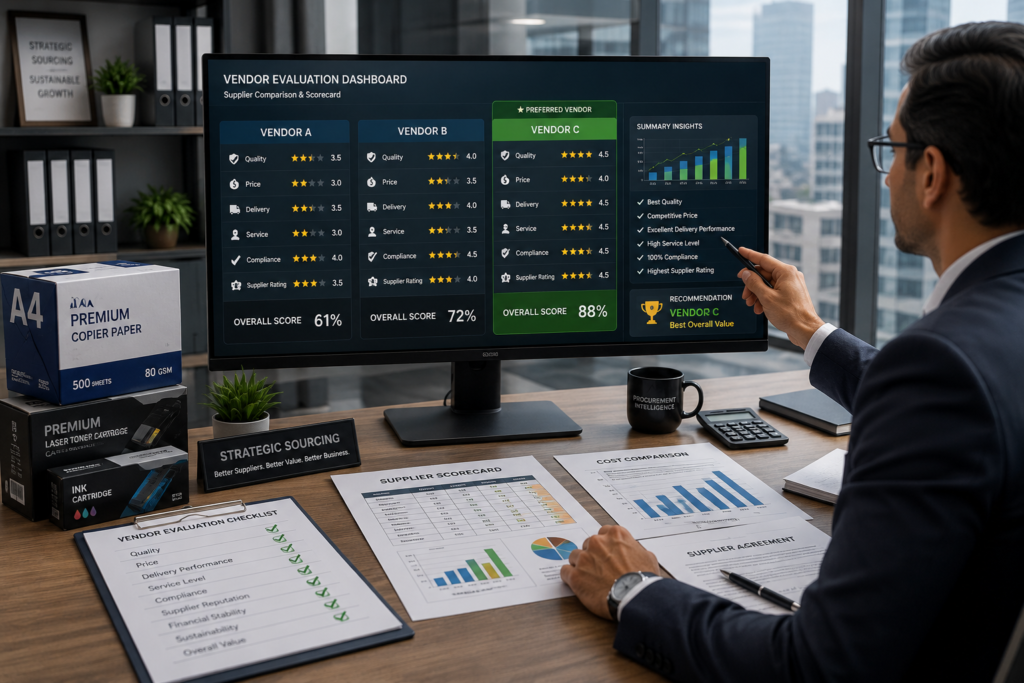
Vendor Evaluation Scorecard
Organizations can assign scores to each criterion.
| Criteria | Weight (%) |
|---|---|
| Product Quality | 25 |
| Pricing | 20 |
| Delivery Performance | 15 |
| Product Availability | 10 |
| Customer Service | 10 |
| Financial Stability | 5 |
| Compliance | 5 |
| Reputation | 5 |
| Payment Terms | 3 |
| Technology Support | 2 |
Businesses can adjust weightages based on their procurement priorities.
Red Flags When Evaluating Vendors
Be cautious if a supplier demonstrates:
- Frequent delivery delays
- Inconsistent product quality
- Poor communication
- Lack of references
- Unclear pricing
- Limited inventory availability
- Compliance concerns
Ignoring these warning signs can create long-term procurement problems.
Best Practices for Supplier Selection
Evaluate Multiple Suppliers
Avoid making decisions based on a single quotation.
Conduct Trial Orders
Small initial purchases help assess supplier performance.
Review Supplier Performance Regularly
Vendor evaluation should be an ongoing process rather than a one-time exercise.
Build Long-Term Relationships
Strong supplier partnerships often create better pricing, service, and reliability.
Conclusion
The right supplier contributes far more than product availability. Reliable vendors help businesses improve operational efficiency, reduce procurement risks, and support long-term growth.
By using a structured vendor evaluation checklist, organizations can select suppliers based on quality, reliability, service, and value rather than price alone.
Whether you are procuring office supplies, copier paper, printer cartridges, housekeeping materials, packaging products, or industrial goods, supplier evaluation remains one of the most important procurement practices.
Frequently Asked Questions (FAQ’s)
What is vendor evaluation?
Vendor evaluation is the process of assessing suppliers based on quality, pricing, delivery performance, reliability, compliance, and service.
Why is vendor evaluation important?
Vendor evaluation helps businesses reduce procurement risks, improve supplier performance, and make better purchasing decisions.
What factors should be considered when evaluating suppliers?
Important factors include quality, pricing, delivery performance, product availability, customer service, financial stability, and compliance.
Should supplier selection be based only on price?
No. Businesses should evaluate overall value, including quality, reliability, service, and long-term procurement benefits.
How often should suppliers be evaluated?
Most organizations review supplier performance quarterly or annually, depending on procurement volume and business requirements.

Recent Comments