
No products in the cart.
Introduction
When purchasing copier paper, printer paper, or office paper, you’ve probably come across terms like Brightness, Whiteness, and Opacity.
Although these terms are often used interchangeably, they describe three completely different paper characteristics.
Understanding these specifications can help businesses choose the right paper for printing, photocopying, marketing materials, reports, presentations, and double-sided documents.
Whether you’re a procurement manager, office administrator, printer, or everyday office user, knowing the difference between paper brightness, whiteness, and opacity ensures better print quality and smarter purchasing decisions.
In this guide, we’ll explain each property in simple terms and help you choose the right paper for your printing needs.
Why Do These Paper Properties Matter?
The quality of paper affects more than just appearance.
It influences:
- Print clarity
- Color reproduction
- Readability
- Double-sided printing
- Professional presentation
- Ink performance
- Overall user experience
Choosing paper based only on GSM can often lead to disappointing print results.
What Is Paper Brightness?
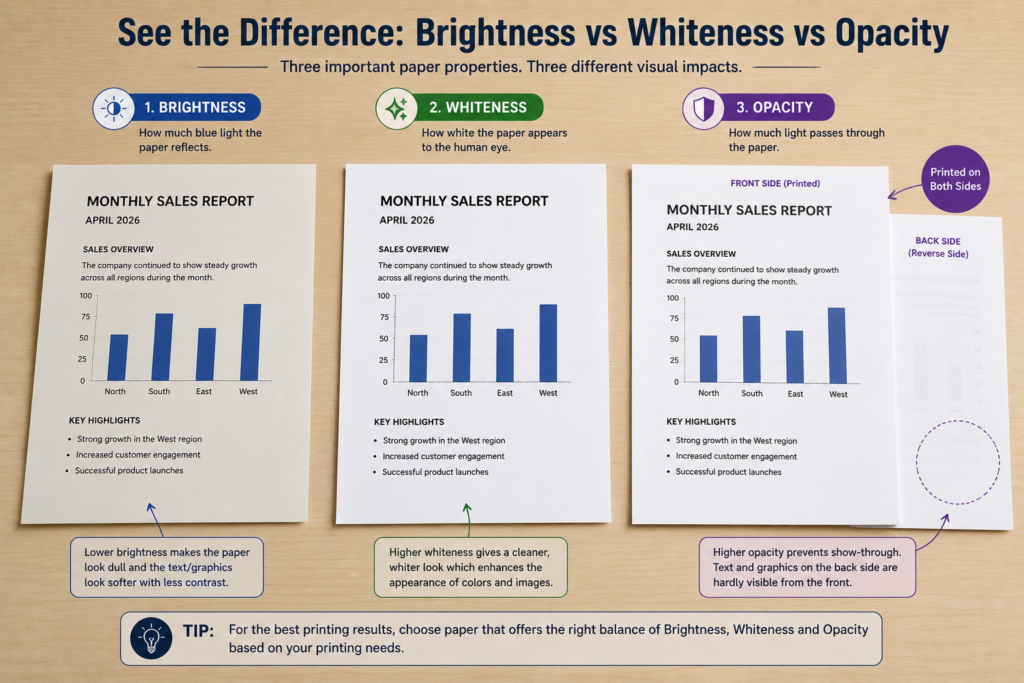
Paper Brightness measures how much blue light the paper reflects.
It is expressed as a percentage.
The higher the brightness percentage, the more light the paper reflects, making printed text and graphics appear sharper.
For example:
| Brightness | Appearance |
|---|---|
| 80–84 | Standard office paper |
| 85–89 | Better everyday printing |
| 90–94 | Premium office documents |
| 95+ | High-end presentation papers |
Why Brightness Matters
Higher brightness generally provides:
- Sharper black text
- Better contrast
- More vibrant graphics
- Easier readability
- Professional-looking documents
However, higher brightness doesn’t always mean the paper looks “whiter.”
What Is Paper Whiteness?
Paper Whiteness measures the overall visual whiteness of paper by evaluating how it reflects all visible wavelengths of light.
Unlike brightness, whiteness considers subtle shades such as:
- Bluish white
- Neutral white
- Cream white
- Warm white
This measurement is often represented using the CIE Whiteness Index.
The higher the CIE value, the whiter the paper appears to the human eye.
Why Whiteness Matters
Higher whiteness offers:
- Better color reproduction
- Cleaner-looking documents
- Premium appearance
- Improved image printing
- Better marketing materials
For brochures, proposals, and client-facing documents, whiteness often matters more than brightness.
What Is Paper Opacity?
Opacity measures how much light passes through the paper.
Simply put: Higher opacity means less show-through from printing on the opposite side.
Why Opacity Matters
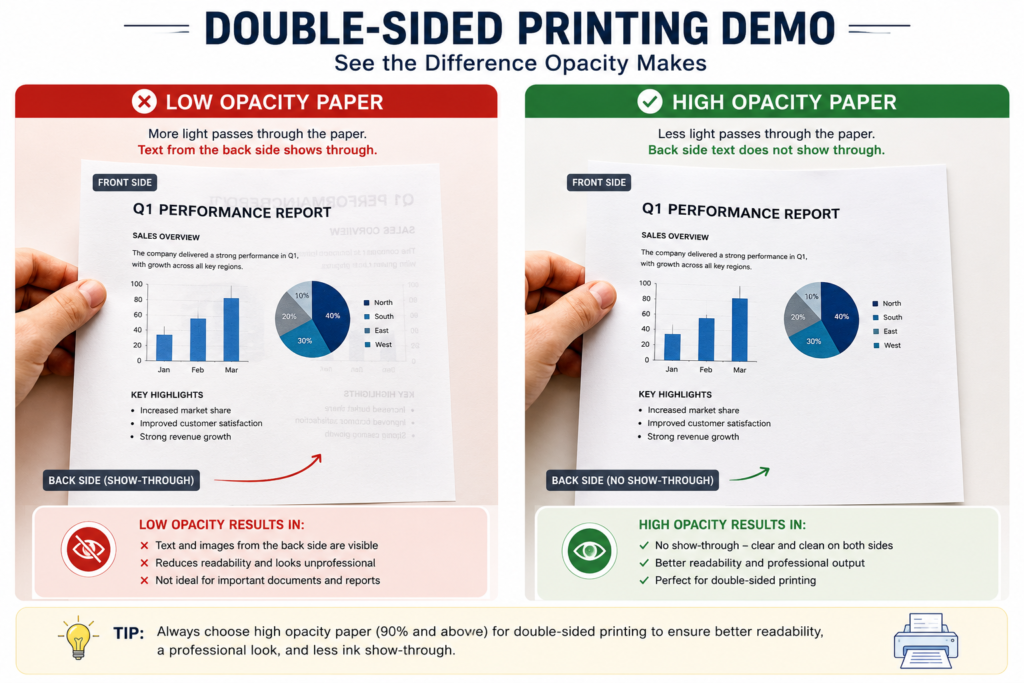
Higher opacity is ideal for:
- Double-sided printing
- Reports
- Books
- Manuals
- Office documents
- Educational materials
Low-opacity paper allows text from the back page to become visible, reducing readability.
Brightness vs Whiteness vs Opacity
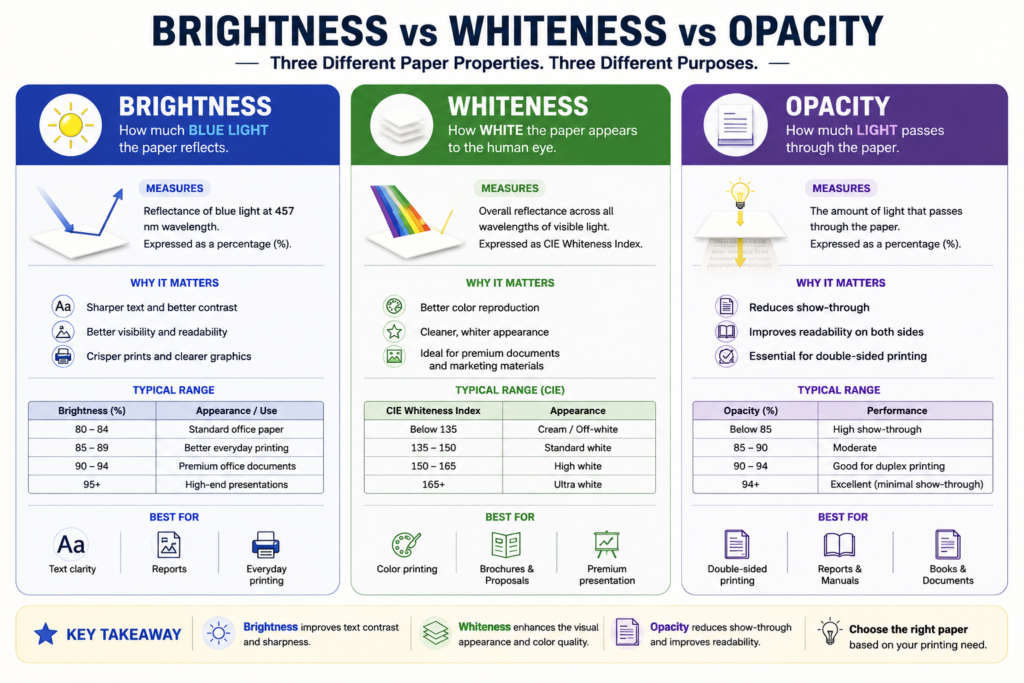
Brightness
How bright does the paper look?
Whiteness
How white does the paper look?
Opacity
Can you see printing through the other side?
Which Property Is Most Important?
The answer depends on your application.
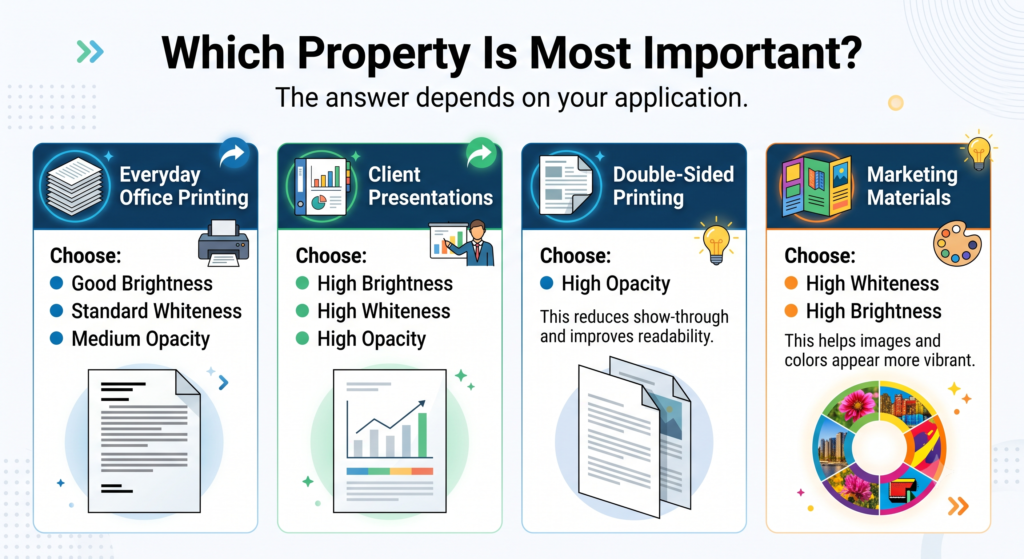
Everyday Office Printing
Choose:
- Good Brightness
- Standard Whiteness
- Medium Opacity
Client Presentations
Choose:
- High Brightness
- High Whiteness
- High Opacity
Double-Sided Printing
Choose:
- High Opacity
This reduces show-through and improves readability.
Marketing Materials
Choose:
- High Whiteness
- High Brightness
This helps images and colors appear more vibrant.
Common Misconceptions
Myth 1
Brighter paper is always whiter.
False.
Brightness and whiteness are measured differently.
Myth 2
Higher GSM means higher opacity.
Not always.
Paper composition and manufacturing also influence opacity.
Myth 3
All white papers are identical.
Different papers can have the same GSM but vary significantly in brightness, whiteness, and opacity
Tips for Buying Office Paper
When selecting copier paper, consider:
✔ GSM
✔ Brightness
✔ Whiteness
✔ Opacity
✔ Printer compatibility
✔ Print volume
✔ Environmental certifications
Rather than focusing on just one specification, evaluate all these factors together.
Frequently Asked Questions
Which is more important—Brightness or Whiteness?
For everyday office printing, brightness is often more noticeable. For premium presentations and color documents, whiteness plays a larger role in visual appeal.
What opacity is good for double-sided printing?
Higher opacity papers generally perform better because they reduce text show-through from the reverse side.
Does GSM determine opacity?
Not entirely. While thicker papers often have higher opacity, fiber quality, fillers, and manufacturing processes also influence opacity.
Is brighter paper better for laser printers?
Higher brightness can improve text contrast and graphic sharpness, but printer compatibility and paper quality are equally important.
Which paper is best for office use?
A quality copier paper with the right balance of GSM, brightness, whiteness, and opacity is suitable for most everyday office printing needs.
Conclusion
Brightness, whiteness, and opacity are three distinct paper properties, each influencing print quality in different ways.
- Brightness affects text clarity and contrast.
- Whiteness determines the visual appearance of the sheet.
- Opacity controls show-through during double-sided printing.
Understanding these specifications helps businesses make informed purchasing decisions, reduce printing issues, and choose the right paper for every application.
Instead of selecting paper based only on GSM or price, evaluate brightness, whiteness, and opacity together to achieve the best printing performance.

Recent Comments