
No products in the cart.
Introduction
Office supplies may seem like small operational expenses, but poor inventory management can lead to stock shortages, emergency purchases, increased procurement costs, and reduced employee productivity.
Many businesses discover they have run out of essential items such as printer paper, toner cartridges, pens, tissue papers, or cleaning supplies only when employees need them most. On the other hand, overstocking can tie up working capital and create unnecessary storage challenges.
An effective office inventory management system helps businesses maintain optimal stock levels, reduce wastage, improve procurement planning, and ensure uninterrupted workplace operations.
This guide explains how businesses can efficiently track, manage, and optimize office supplies inventory.
Table of Contents
What Is Office Inventory Management?
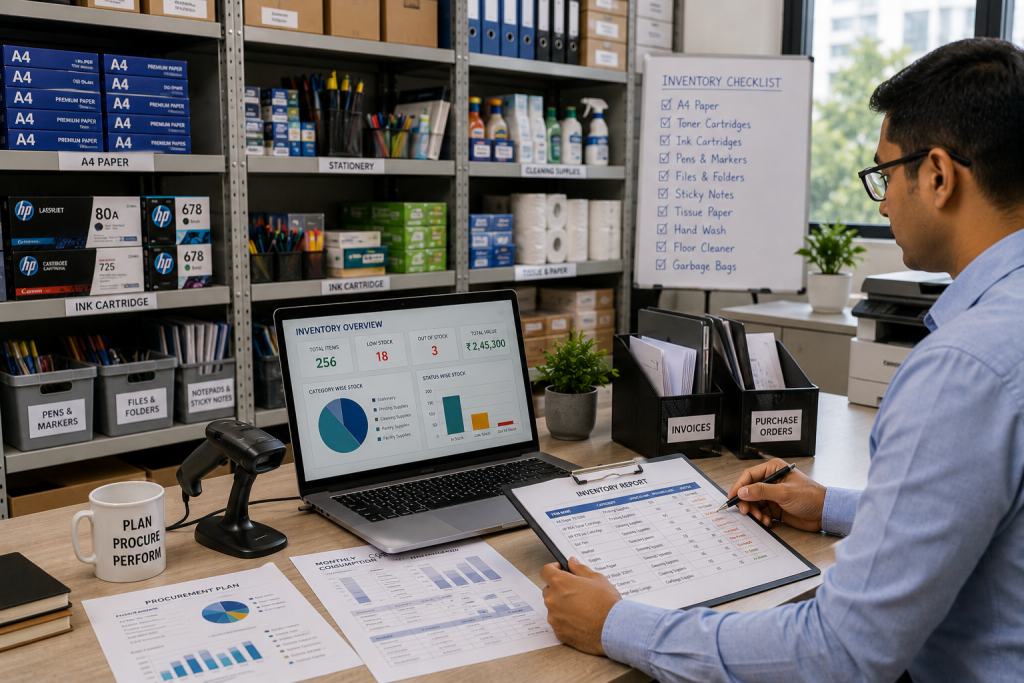
Office inventory management is the process of tracking, controlling, replenishing, and optimizing workplace supplies and consumables.
These items typically include:
- Stationery supplies
- Printer consumables
- Housekeeping materials
- Pantry supplies
- Facility management products
- Safety equipment
- Administrative supplies
The goal is to ensure products are available when needed without carrying excessive stock.
Why Office Inventory Management Is Important
Proper inventory management offers several benefits.
Prevents Stock Shortages
Employees can continue working without disruptions caused by unavailable supplies.
Reduces Procurement Costs
Planned purchasing is usually less expensive than emergency buying.
Improves Productivity
Teams spend less time searching for supplies or requesting urgent purchases.
Enhances Budget Control
Organizations gain better visibility into consumption and spending patterns.
Supports Business Continuity
Critical workplace operations remain uninterrupted.
Common Office Inventory Categories
Stationery Supplies
Typical products include:
- Pens
- Pencils
- Markers
- Highlighters
- Files
- Notebooks
- Sticky notes
Printing Supplies
Common items include:
- A4 paper
- A3 paper
- Toner cartridges
- Ink cartridges
- Labels
Housekeeping Supplies
Frequently stocked products include:
- Floor cleaners
- Tissue papers
- Hand wash
- Garbage bags
- Air fresheners
Pantry Supplies
Typical pantry inventory includes:
- Tea
- Coffee
- Sugar
- Disposable cups
- Stirrers
Facility Management Supplies
Examples include:
- Batteries
- Electrical tapes
- Adhesives
- Safety equipment
Common Inventory Management Challenges
Many organizations face similar inventory problems.
Unplanned Purchases
Buying supplies only after stock runs out often increases costs.
Overstocking
Excess inventory occupies valuable storage space and locks up working capital.
Lack of Visibility
Without proper tracking, businesses may not know current stock levels.
Multiple Vendors
Managing numerous suppliers can complicate procurement processes.
Inaccurate Forecasting
Poor demand estimation leads to shortages or excess inventory.
Essential Inventory Management Best Practices
Categorize Inventory
Organize supplies into categories such as:
- Daily-use items
- Weekly-use items
- Monthly-use items
- Emergency stock
This simplifies monitoring and replenishment.
Set Reorder Levels
Establish minimum stock levels for frequently used products.
For example:
- A4 Paper: Reorder when stock reaches 10 reams
- Toner Cartridges: Reorder when stock reaches 2 units
- Hand Wash: Reorder when stock reaches 5 bottles
This helps prevent stockouts.
Maintain Safety Stock
Safety stock acts as a buffer during unexpected demand spikes or supplier delays.
Products that typically require safety stock include:
- Printer paper
- Toner cartridges
- Tissue papers
- Cleaning supplies
Standardize Office Supplies
Using standardized products reduces procurement complexity.
For example:
- One preferred pen model
- One preferred copier paper brand
- Standardized marker types
This improves purchasing efficiency and inventory control.
Conduct Regular Stock Audits
Inventory should be reviewed periodically.
Recommended schedule:
- High-usage items: Weekly
- Medium-usage items: Monthly
- Slow-moving items: Quarterly
Regular audits help identify discrepancies and wastage.
Inventory Tracking Methods
Manual Tracking
Small businesses often use spreadsheets to monitor stock levels.
Advantages:
- Low cost
- Easy implementation
Limitations:
- Human error
- Time-consuming updates
Inventory Management Software
Growing businesses often benefit from dedicated inventory management tools.
Benefits include:
- Real-time stock visibility
- Automated alerts
- Usage tracking
- Reporting capabilities
ERP-Based Inventory Management
Larger organizations may integrate inventory tracking into ERP systems.
Benefits include:
- Procurement integration
- Budget control
- Vendor management
- Demand forecasting
Key Inventory Metrics to Track
Stock Turnover
Measures how frequently inventory is consumed and replenished.
Stockout Rate
Tracks how often products become unavailable.
Carrying Cost
Measures the cost of storing inventory.
Inventory Accuracy
Compares recorded inventory against actual stock.
Consumption Rate
Tracks average usage over a specific period.
These metrics help improve procurement decisions.
How to Reduce Office Supply Wastage
Monitor Consumption Trends
Identify departments with unusually high usage.
Restrict Uncontrolled Access
Maintain centralized inventory control for frequently consumed items.
Educate Employees
Encourage responsible use of office supplies.
Standardize Procurement
Using approved products helps reduce waste and duplication.
Inventory Management for Multi-Location Businesses
Organizations with multiple offices should:
- Track inventory location-wise
- Standardize procurement policies
- Consolidate reporting
- Monitor inter-office transfers
- Maintain location-specific reorder levels
This improves control and visibility across all locations.
Office Inventory Checklist
Every organization should regularly monitor:
Stationery
- Pens
- Pencils
- Markers
- Files
- Notebooks
Printing Supplies
- A4 paper
- Toner cartridges
- Ink cartridges
- Labels
Housekeeping Supplies
- Tissue papers
- Hand wash
- Garbage bags
- Cleaning chemicals
Pantry Supplies
- Tea
- Coffee
- Sugar
- Disposable cups
Facility Supplies
- Batteries
- Adhesives
- Safety equipment
Common Inventory Management Mistakes
Businesses often increase costs through:
- Ordering without consumption data
- Ignoring reorder levels
- Overstocking slow-moving products
- Poor supplier management
- Lack of inventory audits
- Failing to forecast demand
Avoiding these mistakes can significantly improve operational efficiency.
Future Trends in Office Inventory Management
Modern workplaces are increasingly adopting:
- Automated inventory systems
- Barcode tracking
- QR-code-based inventory management
- AI-driven demand forecasting
- Cloud-based procurement platforms
- Integrated ERP solutions
These technologies help organizations improve inventory accuracy and reduce costs.
Conclusion
Effective office inventory management is not just about tracking supplies. It is a strategic business process that improves operational efficiency, reduces procurement costs, prevents stock shortages, and supports employee productivity.
By implementing structured inventory controls, maintaining appropriate stock levels, and monitoring consumption patterns, businesses can create a more efficient and cost-effective workplace.
Whether you manage a small office, a growing enterprise, or a multi-location organization, a well-designed inventory management system is essential for smooth business operations.
Frequently Asked Questions
What is office inventory management?
Office inventory management is the process of tracking, controlling, and replenishing workplace supplies and consumables.
Why is office inventory management important?
It helps prevent stock shortages, reduce procurement costs, improve productivity, and support business continuity.
What items should be tracked in office inventory?
Businesses should track stationery, printing supplies, housekeeping products, pantry supplies, and facility management materials.
How often should office inventory be reviewed?
High-usage items should be reviewed weekly, while most office supplies should be reviewed monthly.
What is safety stock?
Safety stock is additional inventory maintained to protect against unexpected demand increases or supplier delays.
How can businesses reduce office inventory costs?
Businesses can reduce costs through inventory tracking, standardized procurement, supplier consolidation, bulk purchasing, and regular audits.

Recent Comments