
No products in the cart.
Introduction
A clean and well-maintained workplace is essential for employee health, customer satisfaction, workplace safety, and operational efficiency. Whether you manage a corporate office, educational institution, healthcare facility, retail store, hotel, warehouse, or manufacturing unit, maintaining adequate janitorial supplies is critical to ensuring a hygienic and productive environment.
However, many organizations struggle with cleaning supply shortages, inconsistent procurement practices, and rising facility management costs. Without a structured janitorial supplies checklist, businesses often make emergency purchases, overstock low-priority items, or run out of essential cleaning products when they are needed most.
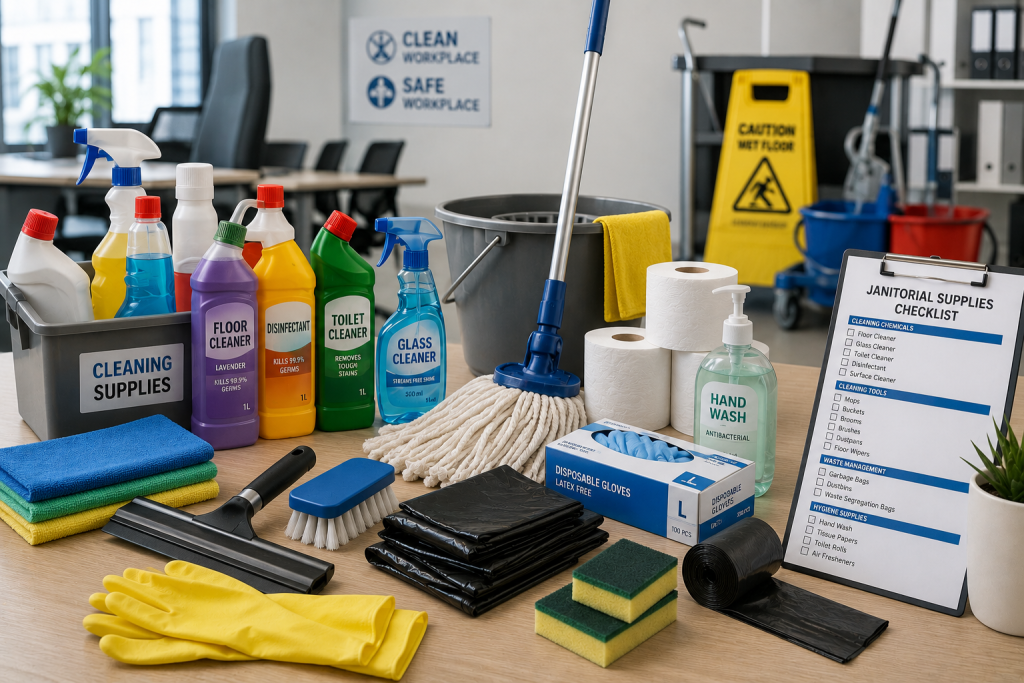
This comprehensive guide covers the essential janitorial supplies every business should maintain and provides a practical procurement framework for facility managers, housekeeping teams, office administrators, and procurement professionals.
Table of Contents
What Are Janitorial Supplies?
Janitorial supplies are products, tools, equipment, and consumables used to clean, sanitize, maintain, and manage commercial facilities.
These supplies help organizations:
- Maintain workplace hygiene
- Reduce the spread of germs
- Improve employee well-being
- Create positive visitor impressions
- Support workplace safety
- Meet cleanliness standards
Janitorial supplies are a critical component of facility management and workplace operations.
Why Janitorial Supplies Matter
Businesses that maintain proper janitorial inventory often experience:
Improved Workplace Hygiene
Regular cleaning reduces bacteria, viruses, dust, and allergens.
Better Employee Productivity
Employees perform better in clean and organized environments.
Enhanced Professional Appearance
Visitors and clients notice workplace cleanliness immediately.
Reduced Health Risks
Proper sanitation helps minimize workplace illness and absenteeism.
Better Facility Maintenance
Regular cleaning extends the life of office furniture, flooring, and equipment.
Essential Janitorial Cleaning Chemicals
Cleaning chemicals form the foundation of every janitorial program.
Floor Cleaner
Used for:
- Tile floors
- Marble floors
- Granite surfaces
- Vinyl flooring
Surface Cleaner
Suitable for:
- Desks
- Workstations
- Reception counters
- Meeting tables
Glass Cleaner
Used on:
- Windows
- Mirrors
- Glass partitions
- Glass doors
Toilet Cleaner
Required for:
- Toilet bowls
- Urinals
- Washroom fixtures
Disinfectant Solutions
Used to sanitize:
- Door handles
- Shared equipment
- Washrooms
- High-touch surfaces
Degreasers
Commonly used in:
- Pantries
- Cafeterias
- Commercial kitchens
Janitorial Cleaning Tools Checklist
Cleaning tools are essential for daily facility maintenance.
Mops
Common types include:
- Cotton mops
- Microfiber mops
- Flat mops
- Spin mops
Buckets
Used for:
- Wet cleaning
- Floor maintenance
- Cleaning solution preparation
Brooms
Suitable for:
- Hard floors
- Outdoor areas
- Storage rooms
Dustpans
Used alongside brooms for waste collection.
Floor Wipers
Help remove excess water and improve floor drying times.
Scrubbing Brushes
Used for:
- Floor cleaning
- Tile maintenance
- Washroom cleaning
Waste Management Supplies
Proper waste management is a key janitorial responsibility.
Dustbins
Organizations typically require:
- Office bins
- Pantry bins
- Washroom bins
- Outdoor waste bins
Garbage Bags
Common sizes include:
- Small garbage bags
- Medium garbage bags
- Large garbage bags
Waste Segregation Bins
Many businesses now maintain:
- Dry waste bins
- Wet waste bins
- Recyclable waste bins
- E-waste bins
Washroom Janitorial Supplies
Washrooms require dedicated cleaning and hygiene products.
Hand Wash
Available in:
- Liquid hand wash
- Foam hand wash
Toilet Tissue
A workplace necessity.
Paper Towels
Used for hand drying and surface cleaning.
Air Fresheners
Available as:
- Aerosol sprays
- Automatic dispensers
- Gel-based fresheners
Urinal Blocks
Help maintain washroom hygiene and odor control.
Personal Protective Equipment for Janitorial Staff
Cleaning personnel should have access to proper protective equipment.
Safety Gloves
Protect against cleaning chemicals and contamination.
Face Masks
Useful during cleaning operations and waste handling.
Safety Goggles
Recommended when using strong cleaning chemicals.
Aprons
Protect clothing and improve workplace safety.
Janitorial Equipment for Large Facilities
Larger facilities may require specialized cleaning equipment.
Vacuum Cleaners
Ideal for:
- Carpets
- Upholstery
- Reception areas
Wet and Dry Vacuum Cleaners
Suitable for both liquid and dry waste.
Floor Scrubbing Machines
Common in:
- Shopping malls
- Warehouses
- Airports
- Corporate campuses
High-Pressure Washers
Used for:
- Parking areas
- Building exteriors
- Industrial facilities
Pantry Cleaning Supplies
Many janitorial teams are responsible for pantry cleanliness.
Essential products include:
- Dishwashing liquid
- Cleaning sponges
- Scrubbing pads
- Kitchen towels
- Degreasers
High-Consumption Janitorial Supplies
Businesses should closely monitor inventory levels of:
- Floor cleaners
- Tissue papers
- Garbage bags
- Hand wash
- Disinfectants
- Air fresheners
- Toilet cleaners
- Cleaning cloths
These items generally require frequent replenishment.
How to Manage Janitorial Inventory Efficiently
Create Monthly Consumption Reports
Track usage trends across locations and departments.
Establish Reorder Levels
Define minimum stock levels for critical products.
Standardize Products
Using consistent products simplifies procurement.
Consolidate Suppliers
Working with fewer vendors often reduces costs.
Conduct Inventory Audits
Review inventory regularly to identify shortages and wastage.
Common Janitorial Procurement Mistakes
Organizations often increase costs by:
- Purchasing supplies only after stockouts occur
- Overstocking slow-moving products
- Using too many vendors
- Failing to track consumption patterns
- Ignoring preventive maintenance requirements
Avoiding these mistakes can significantly improve facility management efficiency.
Monthly Janitorial Supplies Checklist
Cleaning Chemicals
- Floor cleaner
- Glass cleaner
- Toilet cleaner
- Surface cleaner
- Disinfectant
Cleaning Tools
- Mops
- Buckets
- Brushes
- Wipers
- Dustpans
Hygiene Products
- Hand wash
- Tissue papers
- Toilet rolls
- Air fresheners
Waste Management
- Garbage bags
- Dustbin liners
- Waste segregation bags
Safety Equipment
- Gloves
- Masks
- Aprons
- Safety goggles
Conclusion
Janitorial supplies are essential for maintaining clean, safe, and productive workplaces. From cleaning chemicals and hygiene products to waste management supplies and protective equipment, every business depends on an effective janitorial procurement strategy.
Organizations that proactively manage janitorial inventory can reduce costs, improve facility maintenance, support employee well-being, and maintain professional workplace standards.
Whether you manage a small office or a large multi-location enterprise, a structured janitorial supplies checklist can help ensure your facility remains clean, organized, and operational throughout the year.
Frequently Asked Questions
What are janitorial supplies?
Janitorial supplies are cleaning products, tools, equipment, and consumables used to maintain workplace cleanliness and hygiene.
What are the most important janitorial supplies?
Floor cleaners, disinfectants, mops, garbage bags, hand wash, tissue papers, and cleaning tools are among the most essential janitorial products.
What is the difference between janitorial supplies and housekeeping supplies?
Janitorial supplies focus on cleaning and maintenance activities, while housekeeping supplies may also include hygiene products, consumables, and facility support items.
How often should janitorial inventory be reviewed?
Most organizations review janitorial inventory monthly, while high-consumption products may require weekly monitoring.
How can businesses reduce janitorial costs?
Bulk purchasing, vendor consolidation, inventory tracking, and product standardization can significantly reduce janitorial procurement expenses.

Recent Comments